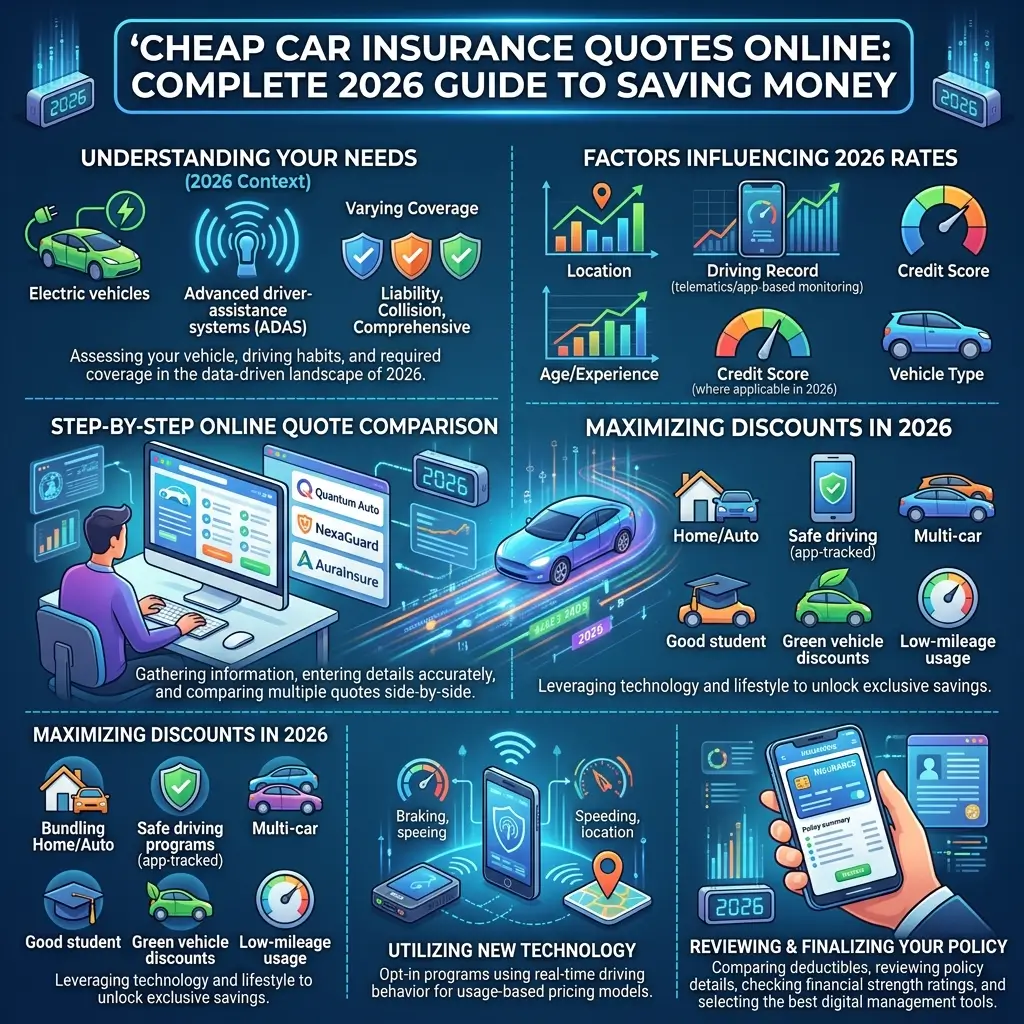

Finding cheap car insurance quotes online is one of the easiest ways to reduce your driving costs in 2026. Car insurance is necessary for financial protection, but that does not mean you should overpay for it.

Many drivers renew the same policy every year without comparing alternatives. Others choose the cheapest policy without checking what it actually covers. Both mistakes can be expensive.

The smartest approach is simple: compare multiple car insurance quotes online, understand the coverage, check the deductible, and choose the policy that gives the best value — not just the lowest price.

This complete guide explains how online car insurance quotes work, what affects your premium, how to lower your insurance cost, and how to choose the best auto insurance policy for your needs.


What Are Car Insurance Quotes?

A car insurance quote is an estimated price for an auto insurance policy.

Insurance companies calculate quotes based on your personal details, driving history, vehicle type, location, and the level of coverage you choose.

A quote is not always the final price, but it gives you a strong idea of how much you may pay.

Insurers usually consider:

  • Your age
  • Driving experience
  • Driving record
  • Vehicle make and model
  • Annual mileage
  • Location
  • Coverage type
  • Deductible amount
  • Claim history
  • Credit score in some countries

Because every insurance company calculates risk differently, two companies can offer very different prices for the same driver.


Why Compare Car Insurance Quotes Online?

Comparing quotes online is one of the best ways to find affordable car insurance.

Instead of contacting each insurer separately, online comparison tools allow you to view multiple offers quickly.


1. You Can Save Money

The same driver may receive very different quotes from different insurers.

For example:

  • Company A may quote $800 per year
  • Company B may quote $1,400 per year

That difference can mean hundreds of dollars in savings.


2. It Is Fast and Convenient

Online quote tools usually take only a few minutes.

You can compare prices, coverage, deductibles, and add-ons from home without paperwork or branch visits.


3. You Can Compare Coverage Side by Side

The cheapest policy is not always the best.

Online comparison helps you check:

  • Liability limits
  • Deductibles
  • Collision coverage
  • Comprehensive coverage
  • Roadside assistance
  • Rental car coverage
  • Claim benefits

This makes it easier to choose real value.


Types of Car Insurance Coverage Explained

Before choosing a cheap quote, you need to understand what the policy covers.


1. Liability Insurance

Liability insurance covers damage you cause to other people or their property.

It may include:

  • Bodily injury liability
  • Property damage liability

This coverage is mandatory in many places.

However, minimum liability coverage may not be enough if you cause a serious accident.


2. Collision Coverage

Collision coverage pays for damage to your own car after an accident.

It can apply if you hit:

  • Another vehicle
  • A wall
  • A pole
  • A fence
  • Another object

This coverage is especially useful for newer or financed cars.


3. Comprehensive Coverage

Comprehensive coverage protects your vehicle from non-collision damage.

This may include:

  • Theft
  • Fire
  • Flood
  • Storm damage
  • Vandalism
  • Falling objects
  • Natural disasters

If your car is valuable, comprehensive coverage can provide important protection.


4. Personal Injury Protection

Personal injury protection, also called PIP in some countries, covers medical expenses for you and your passengers after an accident.

Depending on the policy, it may also cover lost income or rehabilitation costs.


5. Uninsured or Underinsured Motorist Coverage

This coverage protects you if another driver causes an accident but does not have enough insurance.

It is especially useful in areas where many drivers are uninsured or carry very low coverage limits.


How to Get Cheap Car Insurance Quotes Online

Getting cheaper car insurance is not only about searching quickly. It is about comparing properly.


Step 1: Gather Your Information

Before requesting quotes, prepare your details.

You may need:

  • Driver’s license
  • Vehicle registration
  • Car make, model, and year
  • Driving history
  • Current insurance details
  • Annual mileage estimate
  • Address or location

Accurate information helps you receive accurate quotes.


Step 2: Use Multiple Comparison Platforms

Do not rely on just one website.

Use at least two or three comparison platforms because not every insurer appears on every site.

You can also check direct quotes from insurance company websites.


Step 3: Compare the Same Coverage Levels

A common mistake is comparing one low-coverage quote with another full-coverage quote.

To make a fair comparison, keep the same:

  • Liability limits
  • Deductible
  • Coverage type
  • Add-ons
  • Policy duration

This helps you identify the truly cheaper option.


Step 4: Adjust Your Deductible

A deductible is the amount you pay out of pocket before insurance pays the rest.

Usually:

  • Higher deductible = lower premium
  • Lower deductible = higher premium

Choose a deductible you can realistically afford in an emergency.


Step 5: Review the Policy Details

Before buying, check:

  • Exclusions
  • Claim process
  • Coverage limits
  • Cancellation fees
  • Add-on costs
  • Renewal terms

A cheap policy is only useful if it protects you properly.


Factors That Affect Car Insurance Rates

Understanding how insurers price policies can help you lower your premium.


1. Driving Record

Your driving history matters a lot.

Drivers with clean records usually pay less.

Your premium may increase if you have:

  • Accidents
  • Speeding tickets
  • Traffic violations
  • Previous claims

Safe driving is one of the best long-term ways to reduce insurance costs.


2. Age and Driving Experience

Young and inexperienced drivers often pay more because insurers consider them higher risk.

Older drivers with clean records usually receive better rates.


3. Location

Where you live affects your premium.

Urban areas often have higher insurance costs due to:

  • More traffic
  • Higher theft rates
  • More accidents
  • Higher repair costs

Moving to a lower-risk area may reduce your premium.


4. Vehicle Type

The car you drive strongly affects insurance cost.

Expensive cars, luxury vehicles, and sports cars usually cost more to insure because repairs and replacement parts are expensive.

Cars with strong safety ratings may qualify for lower premiums.


5. Annual Mileage

The more you drive, the more likely you are to be involved in an accident.

Drivers with low annual mileage may qualify for discounts.


6. Credit Score

In some countries, insurers use credit-based insurance scores.

A better credit profile may help reduce your premium.


Proven Ways to Lower Your Car Insurance Cost

There are several practical ways to get cheaper car insurance without sacrificing necessary coverage.


1. Increase Your Deductible

If you can afford a higher out-of-pocket cost during a claim, increasing your deductible may reduce your premium.

This works best for safe drivers who rarely file claims.


2. Bundle Insurance Policies

Many insurers offer discounts if you combine policies.

For example:

  • Auto insurance
  • Home insurance
  • Renters insurance
  • Life insurance

Bundling can lead to meaningful savings.


3. Maintain a Clean Driving Record

Avoiding accidents and traffic violations helps keep your premium low.

Safe drivers often qualify for better rates over time.


4. Install Safety and Anti-Theft Features

Insurance companies may offer discounts for vehicles with:

  • Airbags
  • Anti-lock brakes
  • Anti-theft alarms
  • GPS tracking
  • Immobilizers
  • Dash cameras in some markets

These features reduce risk for insurers.


5. Use Telematics or Usage-Based Insurance

Many insurers now offer telematics programs.

These programs track driving behavior such as:

  • Speed
  • Braking
  • Mileage
  • Driving time
  • Acceleration

Safe drivers may receive discounts.


6. Avoid Unnecessary Add-Ons

Add-ons can increase your premium.

Only choose extras you truly need, such as roadside assistance or rental coverage.


7. Review Your Policy Every Year

Do not auto-renew without comparing.

Your rate may change due to:

  • Age
  • Driving record
  • Vehicle value
  • Credit score
  • Market competition

Shopping around before renewal can save money.


Best Time to Shop for Car Insurance

Timing can make a difference.

You should compare quotes:

  • Before your current policy renews
  • After buying a new car
  • After moving to a new city
  • After your credit score improves
  • After major life changes
  • After several years of clean driving

Avoid waiting until the last minute because rushed decisions often lead to poor choices.


Is Minimum Coverage Enough?

Minimum coverage may satisfy legal requirements, but it may not provide enough financial protection.

For example, if your policy covers only $10,000 in property damage and you cause $50,000 in damage, you may have to pay the remaining $40,000 yourself.

Minimum coverage may be suitable for very old cars or drivers with limited budgets, but it can be risky.

A better strategy is to choose affordable coverage that still protects you from major financial loss.


Online vs Offline Car Insurance

Drivers can buy insurance online or through agents.

Both options have advantages.


Online Car Insurance

Pros

  • Faster comparison
  • Often cheaper
  • Easy document upload
  • Instant policy issuance
  • Transparent pricing

Cons

  • Less personal guidance
  • May be confusing for complex needs

Online insurance is ideal for drivers who know what coverage they need.


Offline Insurance Through Agents

Pros

  • Personalized advice
  • Helpful for complex cases
  • Easier explanation of policy terms

Cons

  • May cost more
  • Slower process
  • Limited comparison

Agents can be useful if your situation is complicated or you need detailed guidance.


How Online Tools Calculate Your Quote

Online insurance platforms use algorithms to estimate your premium.

They analyze:

  • Personal risk profile
  • Vehicle risk
  • Location data
  • Accident statistics
  • Theft rates
  • Claim history
  • Coverage levels

This is why quotes can vary widely between companies.

Each insurer uses its own pricing model.


How to Choose the Best Car Insurance Company

Price is important, but it should not be the only factor.

Before choosing an insurer, check the following.


1. Claim Settlement Record

A good insurer should pay valid claims fairly and quickly.

Look for companies with strong claim settlement performance.


2. Customer Reviews

Check real customer experiences about:

  • Claim handling
  • Support quality
  • Renewal process
  • Hidden charges

3. Financial Strength

Choose a financially stable company that can pay claims reliably.


4. Customer Support

Good customer support matters during accidents and emergencies.

Look for:

  • 24/7 support
  • Easy claim filing
  • Mobile app access
  • Fast response time

Common Mistakes to Avoid

Many drivers overpay or underinsure themselves because of simple mistakes.


1. Choosing the Cheapest Policy Without Checking Coverage

Cheap insurance can become expensive if it does not cover your real risks.

Always check coverage limits.


2. Comparing Too Few Quotes

Compare at least 3 to 5 quotes before buying.

More comparison usually means better savings.


3. Ignoring Policy Exclusions

Every policy has exclusions.

Read the fine print before purchasing.


4. Giving Incorrect Information

Never lie on your insurance application.

Incorrect information may lead to:

  • Claim rejection
  • Policy cancellation
  • Legal issues

5. Forgetting to Ask About Discounts

Many insurers offer discounts for:

  • Safe drivers
  • Students
  • Military members
  • Multiple vehicles
  • Bundled policies
  • Low mileage

Always ask what discounts are available.


Benefits of Buying Car Insurance Online

Buying auto insurance online offers several advantages.

  • Quick quote comparison
  • Instant policy purchase
  • Digital documents
  • Easy renewals
  • Transparent pricing
  • Faster updates
  • Convenient claim tracking in many cases

For most drivers, online comparison is the most efficient way to find affordable coverage.


Who Should Compare Car Insurance Quotes Online?

Online quote comparison is useful for almost every driver, especially:

  • First-time car owners
  • Drivers renewing policies
  • Young drivers
  • Families with multiple cars
  • Drivers moving to a new city
  • People buying used cars
  • Drivers looking for lower premiums

Even if you are happy with your current insurer, comparing once a year can help ensure you are not overpaying.


Frequently Asked Questions

Q1: How many car insurance quotes should I compare?

You should compare at least 3 to 5 quotes to find the best combination of price and coverage.

Q2: Does checking car insurance quotes affect my credit score?

In most cases, checking insurance quotes does not affect your credit score.

Q3: Can I switch car insurance anytime?

Yes, most drivers can switch insurers anytime. However, check for cancellation fees or refund rules before switching.

Q4: What is a deductible?

A deductible is the amount you pay out of pocket before your insurance covers the remaining claim amount.

Q5: Is the cheapest car insurance always the best?

No. The cheapest policy may have low coverage limits, high deductibles, or important exclusions.

Q6: Can I get cheaper insurance with a clean driving record?

Yes. A clean driving record is one of the strongest ways to qualify for lower premiums.


Final Thoughts: Cheap Car Insurance Should Still Protect You

Getting cheap car insurance quotes online is not just about finding the lowest price. It is about finding the best value.

The right policy should protect you financially, meet legal requirements, and fit your budget.

To save money in 2026:

  • Compare multiple quotes
  • Review coverage carefully
  • Choose a realistic deductible
  • Ask about discounts
  • Maintain a clean driving record
  • Avoid unnecessary add-ons
  • Recheck rates before renewal

A cheap policy is only good if it gives you the protection you actually need.

Take time to compare wisely, read the details, and choose car insurance that saves money without exposing you to unnecessary financial risk.