
Starting a business is exciting, but growing a business requires money. Whether you are launching a startup, opening a second branch, buying equipment, hiring employees, or simply managing day-to-day operations, access to capital can determine whether your business succeeds or struggles.
This is why business loans remain one of the most important financing tools for entrepreneurs and companies in 2026.
The problem is that many business owners either:
- Get rejected because they are unprepared
- Accept expensive loans with high interest rates
- Borrow more than they can realistically repay
- Choose the wrong financing option for their business needs
A business loan should help your company grow — not create long-term financial pressure.
That’s why understanding how commercial financing works is essential before applying for any loan.
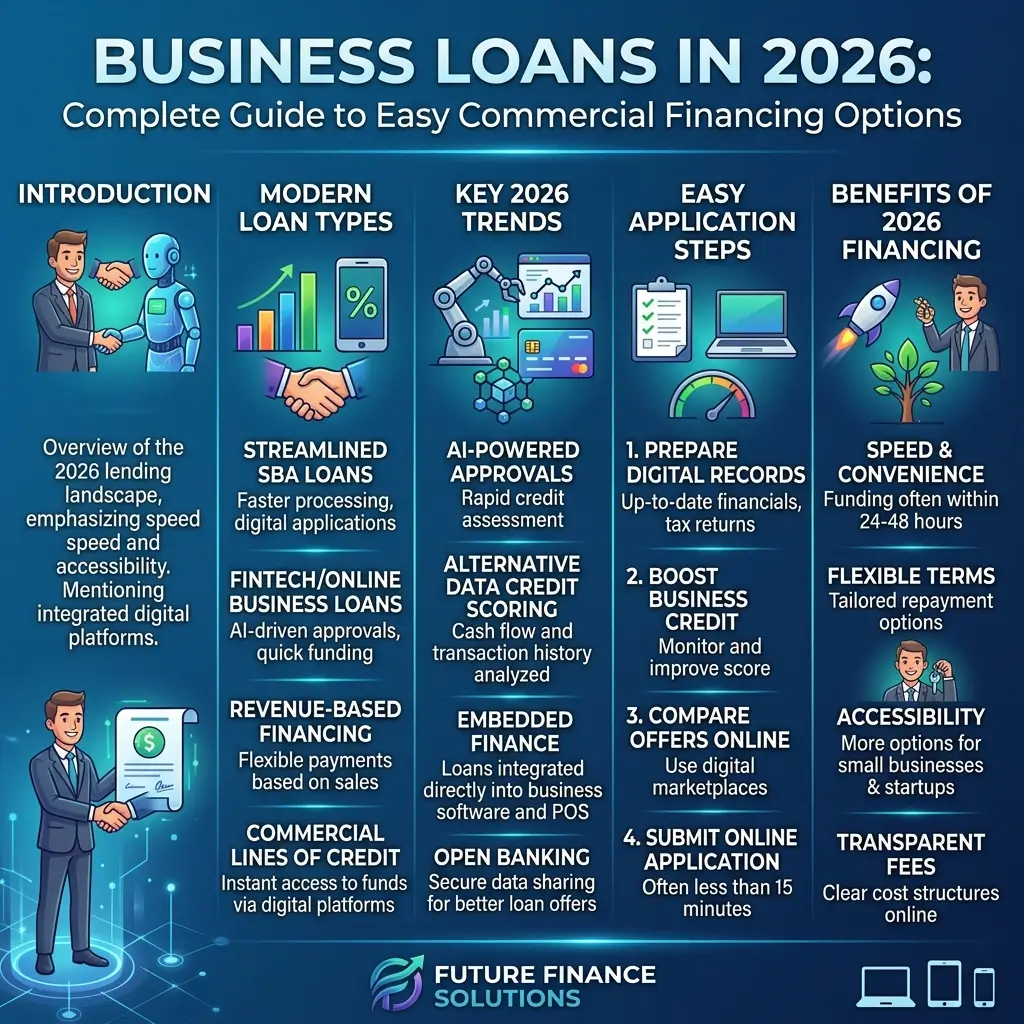
This complete business loan guide explains everything you need to know about commercial financing in 2026, including business loan types, approval requirements, interest rates, secured vs unsecured financing, online lenders, startup funding, and smart borrowing strategies to help you secure funding more successfully.
Whether you are a first-time entrepreneur, small business owner, freelancer, or growing company, this guide will help you make more informed financing decisions.
What Is a Business Loan?
A business loan is a type of financing specifically designed for business purposes.
Unlike personal loans, business loans are intended to support commercial activities such as:
- Business expansion
- Inventory purchase
- Equipment financing
- Working capital
- Hiring employees
- Marketing campaigns
- Cash flow management
- Office setup
- Technology upgrades
The lender provides funds to the business, and the borrower repays the amount over time along with interest or financing charges.
Business loans may be offered by:
- Banks
- Islamic banks
- Microfinance institutions
- Online lenders
- Government-backed programs
- Fintech financing companies
Key Features of Business Loans
Business financing usually includes several important features.
Higher Loan Amounts
Business loans generally offer larger financing amounts compared to personal loans.
Flexible Repayment Terms
Repayment periods vary depending on the loan type and business needs.
Secured or Unsecured Options
Some loans require collateral, while others do not.
Variable Interest Rates
Rates depend on factors such as:
- Credit profile
- Revenue
- Industry risk
- Business age
- Loan amount
Why Businesses Need Loans
Businesses often require financing at different growth stages.
A loan can provide the capital needed to scale operations and improve profitability.
1. Business Expansion
Growing businesses may need funding to:
- Open new locations
- Enter new markets
- Increase production
- Launch new products
Expansion often requires significant investment before profits increase.
2. Inventory Purchase
Retail and product-based businesses frequently need capital to purchase inventory.
This is especially important during:
- Seasonal demand
- Holiday sales
- Large customer orders
Inventory financing helps businesses avoid stock shortages.
3. Cash Flow Management
Even profitable businesses can experience temporary cash flow shortages.
Business loans can help cover:
- Salaries
- Rent
- Supplier payments
- Utilities
- Operational expenses
Working capital financing is commonly used for this purpose.
4. Equipment and Technology Upgrades
Modern equipment improves productivity and efficiency.
Businesses often borrow money to purchase:
- Machinery
- Vehicles
- Computers
- Manufacturing tools
- Restaurant equipment
- Medical devices
Upgrading equipment can improve competitiveness and long-term profitability.
Types of Business Loans in 2026
Different businesses require different financing solutions.
Understanding the available loan types helps you choose the right option.
1. Term Loans
A term loan provides a fixed amount of money repaid over a specific period.
Features
- Fixed repayment schedule
- Monthly installments
- Predictable payments
Best For
- Expansion projects
- Long-term investments
- Large purchases
Term loans are among the most common commercial financing options.
2. Working Capital Loans
Working capital loans are short-term loans used for daily business operations.
Common Uses
- Payroll
- Inventory
- Utility bills
- Rent
- Supplier payments
Best For
Businesses needing temporary liquidity support.
Working capital financing helps businesses maintain smooth operations during slower cash flow periods.
3. Equipment Financing
Equipment loans are designed specifically for purchasing machinery or business equipment.
In many cases, the equipment itself serves as collateral.
Benefits
- Easier approval
- Lower interest rates
- Preserves business cash flow
Best For
Businesses needing expensive equipment upgrades.
4. Business Line of Credit
A business line of credit works similarly to a credit card.
The lender approves a borrowing limit, and the business can access funds when needed.
Key Advantage
You only pay interest on the amount you actually use.
Best For
- Cash flow flexibility
- Emergency expenses
- Seasonal businesses
A line of credit can provide ongoing financial support without taking a large lump-sum loan.
5. SBA or Government-Backed Loans
In some countries, governments support small business financing programs.
These loans may offer:
- Lower interest rates
- Easier repayment terms
- Partial government guarantees
Best For
- Small businesses
- Startups
- First-time entrepreneurs
Government-backed financing often helps businesses that struggle to qualify for traditional loans.
Secured vs Unsecured Business Loans
Business loans generally fall into two major categories.
Secured Business Loans
Secured loans require collateral such as:
- Property
- Equipment
- Inventory
- Vehicles
Advantages
- Lower interest rates
- Larger loan amounts
- Easier approval
Disadvantages
- Risk of losing collateral
- More documentation
Secured loans are common for established businesses.
Unsecured Business Loans
Unsecured loans do not require collateral.
Advantages
- No asset risk
- Faster approval
- Easier for small financing needs
Disadvantages
- Higher interest rates
- Smaller loan amounts
- Stricter credit requirements
Unsecured financing is often used by startups or businesses without major assets.
How to Get a Business Loan Easily
Business loan approval depends heavily on preparation.
Many businesses are rejected because they fail to present strong financial information.
Here’s how to improve your chances.
Step 1: Prepare a Strong Business Plan
A business plan shows lenders how your business operates and how you plan to repay the loan.
Your business plan should include:
- Business model
- Revenue projections
- Growth strategy
- Market analysis
- Financial forecasts
- Loan purpose
A well-prepared plan increases lender confidence.
Step 2: Check Your Credit Profile
Both personal and business credit history matter.
Lenders often review:
- Payment history
- Existing debt
- Credit utilization
- Financial discipline
Improving your credit score before applying can help you secure better rates.
Step 3: Choose the Right Lender
Different lenders serve different types of borrowers.
Options include:
- Traditional banks
- Islamic banks
- Online lenders
- Microfinance institutions
- Fintech financing companies
Compare multiple options before applying.
Step 4: Gather Required Documents
Being organized speeds up approval and improves credibility.
Commonly required documents include:
- Business registration certificate
- Financial statements
- Bank statements
- Tax returns
- Owner identification
- Profit and loss reports
Incomplete documentation often delays approval.
Factors That Affect Business Loan Approval
Lenders evaluate several factors before approving financing.
1. Credit Score
A strong credit score improves approval chances and lowers interest rates.
2. Business Age
Older businesses are usually considered less risky.
Startups often face stricter approval requirements.
3. Revenue and Profitability
Consistent income shows that the business can repay the loan.
Stable cash flow is one of the strongest approval factors.
4. Collateral
Providing collateral reduces lender risk and improves financing terms.
5. Industry Type
Some industries are considered higher risk than others.
For example:
- Restaurants
- Construction
- Startups
- Seasonal businesses
may face stricter lending conditions.
Business Loan Interest Rates in 2026
Business loan interest rates vary significantly depending on the borrower profile and financing type.
Typical ranges include:
| Business Profile | Typical Interest Rate |
|---|---|
| Low-risk businesses | 8% – 15% |
| Medium-risk businesses | 15% – 25% |
| High-risk startups | 25% – 40%+ |
Rates depend on:
- Creditworthiness
- Business performance
- Loan size
- Loan type
- Market conditions
- Collateral
Newer or riskier businesses usually pay higher rates.
How to Reduce Your Business Loan Interest Rate
Lower rates can save businesses a substantial amount over time.
Here are effective ways to improve financing terms.
1. Improve Your Credit Score
Pay debts on time and maintain strong financial discipline.
A better score often means lower interest rates.
2. Offer Collateral
Secured loans usually carry lower rates because the lender has reduced risk.
3. Show Strong Cash Flow
Lenders trust businesses with stable revenue and healthy financial records.
4. Compare Multiple Offers
Never accept the first offer without comparison.
Different lenders may provide significantly different terms.
5. Negotiate Loan Terms
Many borrowers do not negotiate — but lenders often have flexibility.
Strong businesses may qualify for:
- Lower rates
- Reduced fees
- Better repayment terms
Online Business Loans vs Traditional Bank Loans
In 2026, many businesses now use online lenders instead of traditional banks.
Both options have advantages.
Online Business Loans
Advantages
- Faster approval
- Less paperwork
- Easier application process
- Funding within 24–72 hours
Disadvantages
- Higher interest rates
- Smaller loan amounts
- More expensive fees
Online lenders are popular among startups and small businesses needing quick cash flow support.
Traditional Bank Loans
Advantages
- Lower interest rates
- Better long-term financing
- More stable lending environment
Disadvantages
- Slower approval
- Stricter requirements
- More documentation
Banks are usually better for larger and long-term financing needs.
Common Business Loan Mistakes to Avoid
Many businesses create financial problems because they borrow incorrectly.
1. Borrowing Without a Clear Plan
Never take a loan without understanding exactly how the money will be used.
Poor planning increases financial risk.
2. Ignoring Total Loan Cost
Many borrowers focus only on monthly payments.
Always calculate:
- Interest cost
- Processing fees
- Hidden charges
- Penalties
The cheapest-looking loan is not always the best.
3. Overborrowing
Too much debt can damage cash flow and create repayment pressure.
Borrow only what your business can realistically manage.
4. Not Reading Terms Carefully
Always review:
- Repayment schedule
- Penalty clauses
- Interest structure
- Early repayment conditions
Understanding the agreement protects your business.
5. Mixing Personal and Business Expenses
Using business loans for personal spending creates financial instability and accounting problems.
Keep business finances separate.
Best Uses of Business Loans
Business financing should support growth and productivity.
Good Uses of Business Loans
- Expanding operations
- Purchasing equipment
- Hiring staff
- Inventory management
- Marketing campaigns
- Technology upgrades
- Opening new locations
These investments can help increase revenue and efficiency.
Poor Uses of Business Loans
Avoid using commercial financing for:
- Personal expenses
- Speculative investments
- Luxury spending
- Unplanned purchases
Bad borrowing decisions can hurt long-term business health.
Benefits of Business Loans
A well-managed business loan can provide several advantages.
1. Access to Capital
Business loans provide funding that may otherwise take years to save.
2. Supports Growth
Financing allows businesses to scale faster.
3. Improves Cash Flow
Working capital loans help businesses manage temporary financial pressure.
4. Builds Business Credit
Responsible repayment improves your commercial credit profile.
Strong business credit may help secure larger financing later.
Risks of Business Loans
Business financing also involves risks.
1. Debt Burden
Monthly repayments can pressure business cash flow.
2. High Interest Costs
Especially with unsecured or high-risk loans.
3. Collateral Risk
Defaulting on secured loans may result in asset loss.
4. Financial Stress
Poorly structured loans can damage long-term business stability.
Tips for First-Time Business Borrowers
If you are applying for your first business loan, follow these practical tips.
Start Small
Smaller loans are easier to manage and repay.
Maintain Proper Financial Records
Good bookkeeping improves credibility with lenders.
Build a Repayment History
Consistent repayment strengthens future financing opportunities.
Work With Trusted Lenders
Choose reputable lenders with transparent terms.
Avoid suspicious financing offers.
Improve Cash Flow Before Applying
Lenders prefer financially stable businesses.
Frequently Asked Questions (FAQs)
Q1: Can I get a business loan without collateral?
Yes, but unsecured loans usually have higher interest rates and stricter approval requirements.
Q2: What credit score is needed for a business loan?
Many lenders prefer scores above 650, but requirements vary depending on the lender and loan type.
Q3: Can startups qualify for business loans?
Yes, although approval is generally harder without strong revenue or business history.
Q4: Is it safe to apply for business loans online?
Yes, if you use reputable lenders and secure platforms.
Q5: How long does business loan approval take?
- Online lenders: usually 1–3 days
- Traditional banks: often 1–3 weeks
Q6: Should I choose secured or unsecured financing?
Secured loans usually offer lower rates, while unsecured loans provide faster access without collateral.
Final Thoughts: Smart Business Financing Builds Stronger Companies
A business loan should not simply solve a short-term cash problem. The right financing strategy can help your company grow, improve operations, increase revenue, and build long-term success.
The key is borrowing responsibly.
Before taking a business loan:
- Understand your financing needs
- Compare multiple lenders
- Review all fees and terms
- Borrow only what you can repay comfortably
- Create a realistic repayment plan
In 2026, business owners have more financing options than ever before — from banks and Islamic lenders to fintech platforms and online commercial financing companies.
But the smartest entrepreneurs are not the ones who borrow the most money. They are the ones who use financing strategically to create sustainable business growth without unnecessary financial stress.