
Education has always been one of the most powerful investments a person can make. A good degree, professional certification, or specialized skill can open doors to better career opportunities, higher income, and long-term financial stability. But in 2026, the rising cost of education has made it increasingly difficult for many students and families to pay for studies without financial support.
That’s where student loans come in.
Whether you’re planning to study locally or abroad, understanding how education financing works is essential. A student loan can help you achieve your academic goals, but poor borrowing decisions can also create years of financial pressure after graduation.
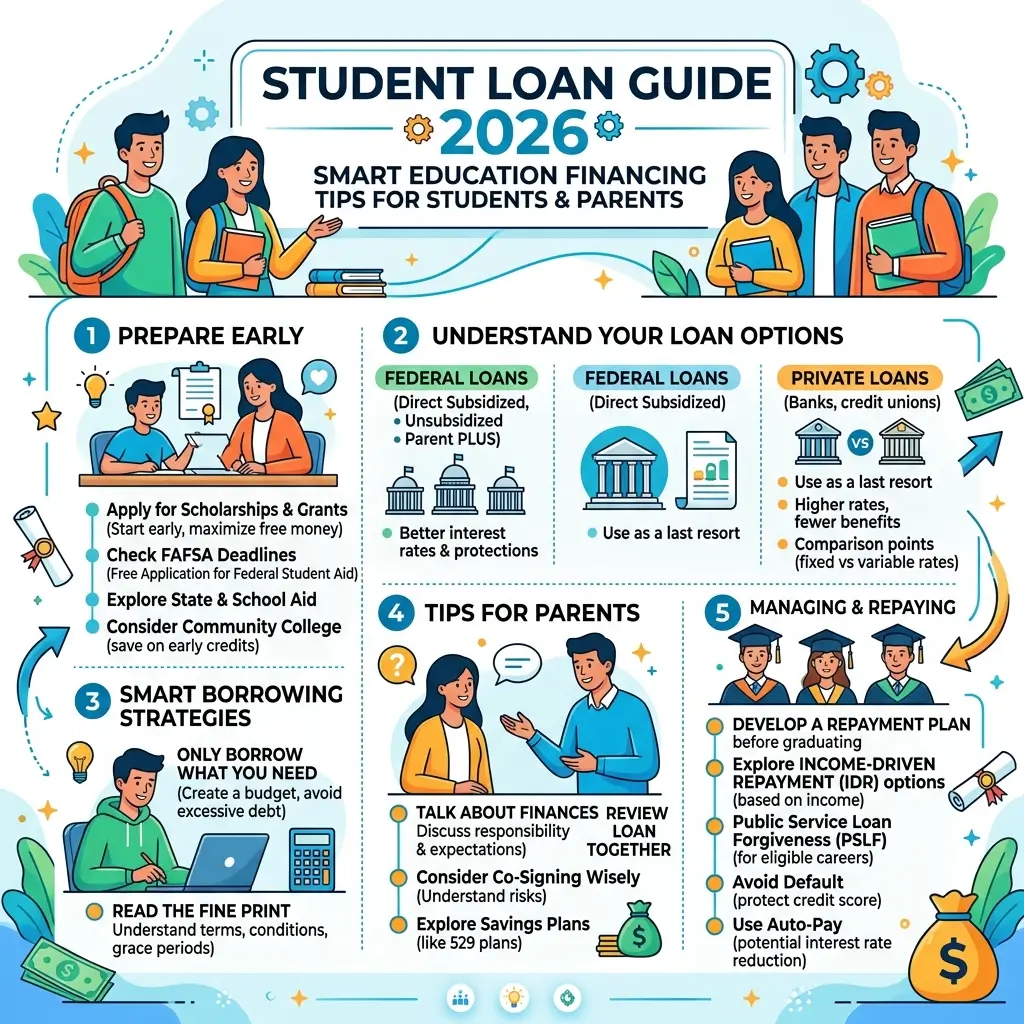
This complete student loan guide explains everything you need to know about education financing in 2026 — including how student loans work, interest rates, eligibility, repayment strategies, and smart borrowing tips that can save you thousands over time.
If you are a student, parent, or future international applicant looking for practical and realistic advice, this guide will help you make informed financial decisions.
What Is a Student Loan?
A student loan is a type of financial assistance designed specifically to help students pay for education-related expenses.
Instead of paying all educational costs upfront, students borrow money from a government program, bank, or private lender and repay it later — usually after completing their studies.
Student loans are commonly used for:
- Tuition fees
- Hostel or accommodation expenses
- Books and study materials
- Transportation
- Laptop and academic equipment
- Daily living expenses
- Study abroad costs
Unlike scholarships or grants, student loans must be repaid, often with interest.
The main advantage is that students can access quality education immediately without waiting years to save enough money.
Why Student Loans Are More Important in 2026
Education costs have increased significantly across the world. Universities are charging higher tuition fees, inflation has raised living expenses, and studying abroad now requires a much larger financial commitment than before.
Because of this, education financing has become essential for many families.
In 2026, student loans are especially important for:
- International students
- Digital learning programs
- Medical and engineering students
- Students pursuing postgraduate degrees
- Families facing economic pressure
- Students attending private universities
At the same time, lenders have introduced more flexible financing options, including income-based repayment plans and Islamic education financing models.
This means students now have more choices — but they also need to understand the risks before borrowing.
Types of Student Loans in 2026
Not all student loans work the same way. Choosing the right loan type can significantly reduce your repayment burden in the future.
1. Government Student Loans
Government-backed student loans are usually considered the safest and most affordable option.
These loans are supported by the state and often come with lower interest rates and flexible repayment terms.
Key Benefits
- Lower interest rates
- Easier repayment schedules
- Grace period after graduation
- Subsidized interest in some cases
- Income-based repayment options
Best For
- Local university students
- Middle-income families
- Students needing long-term repayment flexibility
Government loans are generally the first option students should explore before considering private lenders.
2. Private Student Loans
Private education loans are offered by banks, fintech lenders, and financial institutions.
These loans can provide larger funding amounts, especially for international education, but they often come with higher interest rates and stricter conditions.
Features of Private Student Loans
- Faster approval process
- Larger borrowing limits
- Higher interest rates
- Credit score evaluation
- Co-signer or guarantor requirements
Best For
- Students studying abroad
- Students without access to government aid
- High-cost degree programs
Private loans can be useful, but students must carefully compare offers before signing any agreement.
3. Islamic Student Financing
In many Muslim-majority countries, students prefer Shariah-compliant financing solutions instead of traditional interest-based loans.
Islamic student financing uses ethical structures that avoid conventional interest (riba).
Common Features
- Interest-free structures
- Profit-sharing or service-based models
- Ethical financing principles
- Transparent repayment terms
Best For
- Students seeking halal financing options
- Families preferring Islamic banking systems
Islamic education financing has become increasingly popular in 2026, especially in Pakistan, the Middle East, and parts of Southeast Asia.
How Student Loans Work
Understanding the loan process is extremely important before applying.
Here’s a simple step-by-step breakdown of how student loans work.
Step 1: Apply for the Loan
The student submits an application along with required documents.
Lenders usually evaluate:
- Academic history
- Admission confirmation
- Financial background
- Family income
- Credit profile of co-signer
Step 2: Loan Review and Approval
The lender checks whether the applicant qualifies for financing.
Important factors include:
- University reputation
- Degree program
- Expected future income
- Financial need
- Creditworthiness
Approval times vary depending on the lender.
Step 3: Funds Disbursement
Once approved, the money is released.
The funds may be sent:
- Directly to the university
- To the student’s bank account
- In installments by semester
Some lenders also provide additional funding for accommodation and living expenses.
Step 4: Grace Period
Most student loans offer a grace period after graduation.
This means students don’t have to begin repayments immediately.
Typical grace periods range from:
- 6 months
- 12 months
- Until employment begins
Step 5: Repayment Begins
After the grace period ends, monthly payments start.
Repayment includes:
- Principal amount
- Interest charges
- Additional lender fees (if applicable)
The repayment period may last anywhere from 5 to 20 years.
Student Loan Interest Rates in 2026
Interest rate is one of the most important factors when choosing a student loan.
A small difference in interest rate can cost thousands over time.
Typical Student Loan Interest Rates
| Loan Type | Average Interest Rate |
|---|---|
| Government Loans | 3% – 8% |
| Private Loans | 8% – 18% |
| High-Risk Borrowers | 18%+ |
The exact rate depends on:
- Country
- Credit history
- Co-signer quality
- Loan amount
- Repayment period
- Type of institution
Fixed vs Variable Interest Rates
Fixed Interest Rate
The interest rate stays the same throughout the loan term.
Advantages
- Predictable payments
- Easier budgeting
- Protection against rising rates
Variable Interest Rate
The interest rate changes based on market conditions.
Advantages
- Lower starting rates
- Potential savings if rates fall
Risks
- Monthly payments can increase
- Long-term uncertainty
For most students, fixed-rate loans are safer and easier to manage.
Eligibility Criteria for Student Loans
Student loan requirements vary by lender, but most applicants need to meet several basic conditions.
Common Eligibility Requirements
- Admission to a recognized institution
- Valid ID or passport
- Acceptable academic performance
- Proof of family income
- Co-signer or guarantor
- Age requirements
- Citizenship or residency status
Some international student lenders may also require English proficiency scores or visa documentation.
Documents Required for Education Loans
Preparing your paperwork early improves approval chances and speeds up processing.
Commonly Required Documents
- National ID card or passport
- Admission letter
- Academic transcripts
- Fee structure from university
- Income proof of parents or guardian
- Bank statements
- Passport-size photographs
- Visa documents (for international studies)
Always double-check requirements with your lender because missing documents can delay approval.
How Much Should You Borrow?
One of the biggest student loan mistakes is borrowing more money than necessary.
Many students underestimate how difficult repayment becomes after graduation.
Smart Borrowing Rule
Only borrow what you truly need.
Focus on essential expenses such as:
- Tuition fees
- Accommodation
- Study materials
- Transportation
- Basic living costs
Avoid using student loans for:
- Luxury purchases
- Vacations
- Expensive gadgets
- Lifestyle upgrades
Remember: every extra dollar borrowed also increases future interest payments.
Benefits of Student Loans
When managed responsibly, student loans can provide life-changing opportunities.
1. Access to Higher Education
Student loans make education accessible for students who cannot afford large upfront payments.
Without financing, many talented students would never attend university.
2. Flexible Repayment Structure
Most education loans are designed with students in mind.
Repayment usually starts after graduation, giving borrowers time to secure employment.
3. Opportunity to Study Abroad
International education can be expensive.
Student loans help cover:
- Tuition
- Visa costs
- Airfare
- Accommodation
- Living expenses
This allows students to access world-class institutions and global career opportunities.
4. Building Credit History
Making on-time payments helps students establish a strong credit profile.
Good credit can help later with:
- Car financing
- Home loans
- Business funding
- Credit card approvals
Risks and Challenges of Student Loans
While student loans can be useful, they also carry serious financial responsibilities.
Understanding the risks is essential.
1. Long-Term Debt Burden
Large education loans can take many years to repay.
Some graduates struggle with debt well into adulthood.
2. Interest Accumulation
Interest keeps growing if payments are delayed or missed.
This can dramatically increase the total repayment amount.
3. Employment Uncertainty
Repayment pressure becomes difficult if graduates cannot find stable jobs quickly.
This is especially risky for students entering low-paying industries.
4. Credit Score Damage
Missing payments negatively affects credit history.
Poor credit can impact future financial opportunities.
Smart Student Loan Tips for 2026
Managing education financing wisely can save money and reduce stress.
Here are some practical strategies every student should follow.
1. Borrow Only What You Need
Avoid unnecessary debt.
Smaller loans are easier to repay and reduce interest costs.
2. Compare Multiple Lenders
Never accept the first offer without comparison.
Check:
- Interest rates
- Repayment flexibility
- Processing fees
- Grace periods
- Penalties
Even a small rate difference matters over time.
3. Prioritize Government Loans
Government-backed loans usually offer better protections and lower rates than private lenders.
Always explore public financing programs first.
4. Start Payments Early If Possible
Even small payments during study years can reduce long-term interest significantly.
This strategy lowers total loan cost.
5. Track Your Loan Regularly
Know:
- Remaining balance
- Interest rate
- Due dates
- Monthly payment amount
Ignoring your loan can lead to financial surprises later.
Best Student Loan Repayment Strategies
Repayment planning is just as important as borrowing.
The right strategy can help you become debt-free faster.
1. Standard Repayment Plan
This involves fixed monthly payments over a set period.
Benefits
- Predictable payments
- Faster loan payoff
- Lower total interest
2. Income-Based Repayment
Monthly payments depend on your earnings.
Best For
- Graduates with lower starting salaries
- Freelancers
- Self-employed professionals
This option offers flexibility during financially difficult periods.
3. Early Repayment Strategy
Paying more than the minimum reduces interest dramatically.
Even small extra payments can shorten repayment time by years.
4. Refinancing Student Loans
Some lenders allow borrowers to refinance loans at lower interest rates.
Advantages
- Lower monthly payments
- Reduced interest costs
- Simplified repayment
However, refinancing may remove certain government protections.
Scholarships vs Student Loans
Many students wonder whether scholarships are better than loans.
The reality is that both can work together.
Scholarships
Advantages
- No repayment required
- Merit-based or need-based
- Reduces financial stress
Limitations
- Highly competitive
- Limited availability
Student Loans
Advantages
- Easier access to funding
- Covers large expenses
- Flexible financing options
Limitations
- Must be repaid
- Interest charges apply
Best Strategy
The smartest approach is to combine scholarships with responsible borrowing.
This minimizes debt while still covering education costs.
Common Student Loan Mistakes to Avoid
Many borrowers create financial problems simply because they don’t understand how loans work.
Avoid these common mistakes.
1. Borrowing Excessively
Taking more money than necessary creates long-term stress.
Always calculate realistic costs.
2. Ignoring Interest Rates
A high-interest loan becomes much more expensive over time.
Always compare multiple offers before signing.
3. Missing Payments
Late payments damage your credit score and increase penalties.
Set reminders or automate payments whenever possible.
4. Not Reading Loan Terms
Many students sign agreements without understanding:
- Interest calculations
- Penalty fees
- Repayment schedules
- Grace periods
Always read the full contract carefully.
Can You Study Abroad With a Student Loan?
Yes — many lenders now specialize in international education financing.
Student loans for studying abroad can cover:
- University tuition
- Accommodation
- Visa processing
- Flight tickets
- Health insurance
- Living expenses
However, approval standards are often stricter.
Common Requirements for International Student Loans
- Strong academic performance
- Recognized university admission
- Co-signer or guarantor
- Higher financial guarantees
- Stable repayment plan
Study abroad loans are becoming increasingly common in 2026 due to growing global education demand.
Is a Student Loan Worth It?
In many cases, yes.
A student loan can provide access to education that leads to:
- Better career opportunities
- Higher earning potential
- Professional growth
- Financial independence
However, a student loan is only worth it when:
- The degree has strong career value
- Borrowing remains manageable
- Repayment planning is realistic
- The student understands the loan terms
Education financing should be viewed as a strategic investment — not free money.
Frequently Asked Questions (FAQs)
Q1: When do student loan repayments start?
Most lenders begin repayment after graduation or after a grace period of several months.
Q2: Can I get a student loan without a guarantor?
Some lenders offer no-guarantor loans, but approval is usually harder and interest rates may be higher.
Q3: Are student loan interest rates high in 2026?
It depends on the lender, country, and borrower profile. Government loans are generally cheaper than private loans.
Q4: Can I repay my student loan early?
Yes. Early repayment reduces total interest costs and helps you become debt-free faster.
Q5: What happens if I miss payments?
Missed payments can result in penalties, increased interest, and credit score damage.
Q6: Is studying abroad with a loan a good idea?
It can be worthwhile if the degree improves long-term career opportunities and earning potential.
Final Thoughts: Borrow Smart, Graduate Strong
A student loan can either become a stepping stone toward success or a financial burden that follows you for years.
The difference depends on how wisely you borrow and manage your education financing.
In 2026, students have more funding opportunities than ever before — including government loans, private education financing, and Islamic student funding solutions. But smart decision-making remains essential.
Before taking any loan:
- Compare lenders carefully
- Understand the repayment terms
- Borrow only what you truly need
- Focus on career-focused education
- Create a repayment strategy early
Education is an investment in your future, but financial responsibility matters just as much as academic success.
If you approach student loans strategically, you can achieve your educational goals while protecting your long-term financial health.